How to Diagnose a Slow Computer Remotely: An IT Checklist
A support ticket comes in:
“My computer is really slow.”
For an IT technician, that description doesn’t tell you very much.
Is the processor overloaded? Is the computer running out of memory? Is one application consuming most of the system resources? Is the drive nearly full? Did an application or Windows service recently start failing?
The traditional approach is to remote into the computer, open Task Manager, Event Viewer and System Information, and start looking around.
But there is a better first step:
Find out what is happening on the computer before you take control of it.
Modern remote computer management tools can give IT technicians visibility into a computer’s condition from a centralized management screen. RemoteToPC was designed around that idea: remote access is important, but IT support often begins before you open a remote desktop session.
Here’s a practical checklist for diagnosing a slow Windows computer remotely.
1. Start With the Computer’s Overall Health
Before troubleshooting individual applications, look at the basic condition of the computer.
Some of the first things an IT technician should check are:
CPU utilization
Memory usage
Available disk space
System uptime
Computer specifications
Running processes
Recent Windows events
These few pieces of information can quickly tell you whether the user’s complaint is caused by a lack of resources, a runaway application, failing software or simply an underpowered computer.
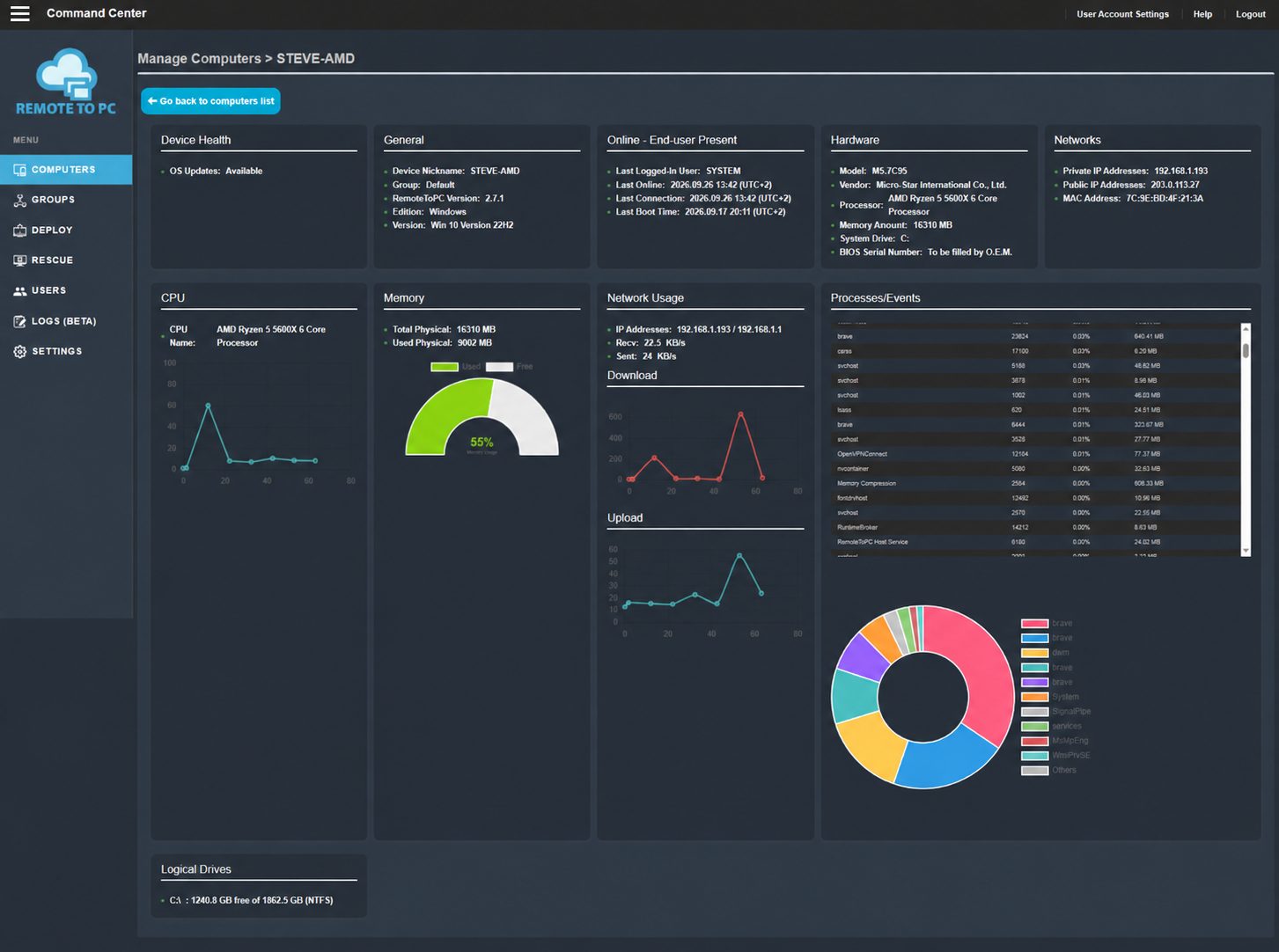
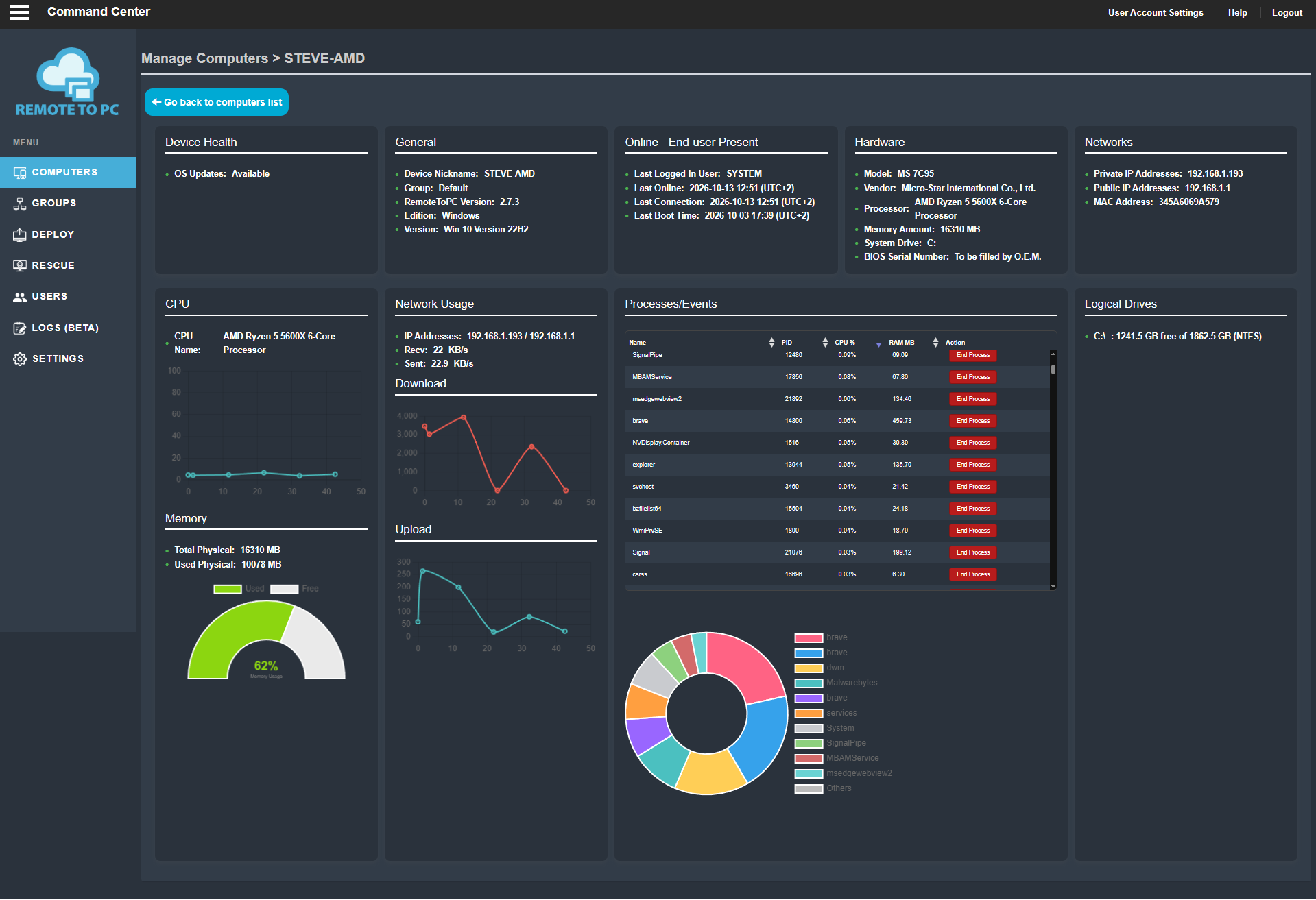
RemoteToPC’s Remote Management and Monitoring tools are designed to put this kind of information in front of IT technicians from the Manage Computers area.
Instead of connecting blindly to every computer that has a problem, you can begin by looking at what the computer is actually doing.
From the IT Bench/NOC
If someone says their computer is slow, resist the temptation to reboot it immediately.
A reboot may make the problem disappear temporarily, but it can also remove some of the evidence that tells you why the computer became slow in the first place.
Look first. Reboot second.
2. Check CPU Usage
High CPU usage is one of the most obvious causes of a slow computer.
When processor utilization remains near its maximum for an extended period, Windows has fewer CPU resources available for everything else the user is trying to do.
A technician should ask:
Is CPU usage unusually high right now?
Has it remained high?
Is the computer idle but still showing high CPU utilization?
Which process is responsible?
Is the process something expected?
Did an application, update or service recently begin behaving differently?
CPU information by itself won’t always identify the problem, but it tells you where to look next.
If CPU utilization is high, the next step is usually process-level information.
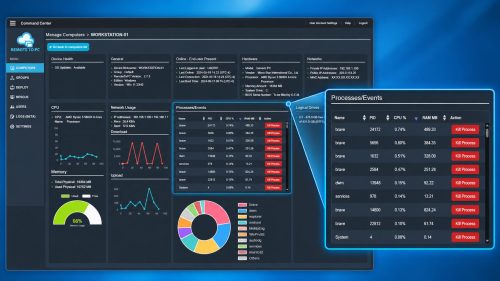
IMAGE 2 — INSERT HERE
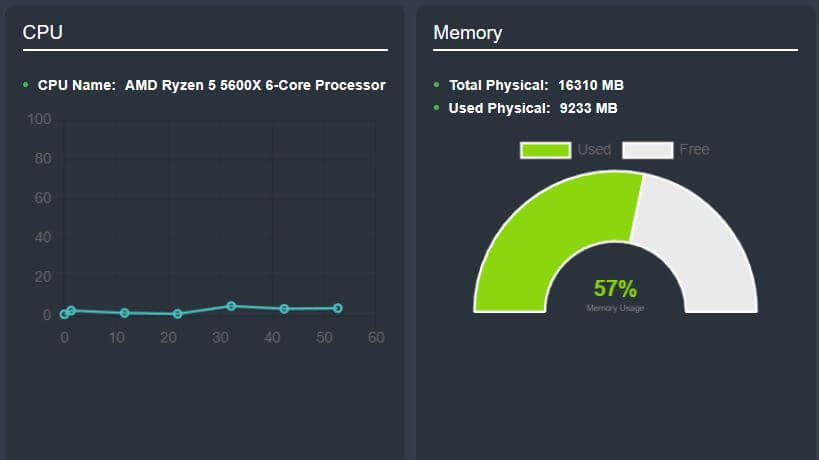
Checking CPU and memory utilization can give an IT technician an immediate indication of why a remote computer is performing poorly.
3. Check Memory Usage
CPU isn’t the only resource that can make a computer feel painfully slow.
A Windows computer that is running short on available RAM may spend increasing amounts of time moving data between physical memory and the page file.
The user may report:
Applications taking a long time to open
Switching between programs becoming sluggish
Browser tabs constantly reloading
The entire desktop intermittently freezing
Programs becoming unresponsive
Again, don’t stop at the percentage.
Ask why memory usage is high.
Is one program consuming several gigabytes of RAM?
Are there dozens of browser processes?
Has an application gradually consumed more memory throughout the day?
Or is this simply an older PC with too little RAM for its current workload?
Being able to see the machine’s memory condition alongside its hardware information gives the technician valuable context.
A machine using 7 GB of memory means something very different when it has 8 GB installed than when it has 32 GB.
4. Look at the Running Processes
This is where remote diagnostics become particularly useful.
A computer can show high CPU or memory usage, but the resource percentage only tells you that there is a problem.
The process list may tell you what is causing it.
When troubleshooting a remote computer, look for processes that are:
Consuming unusually high CPU
Using excessive amounts of memory
Running when they shouldn’t be
Repeatedly starting or stopping
Associated with an application the user says is malfunctioning
Unfamiliar and deserving further investigation
For example, suppose the user reports that the entire computer becomes slow whenever a particular business application is running.
You check the machine remotely and find:
CPU: 96%
Then you look at running processes and discover that the application is responsible for most of it.
You now know substantially more about the problem before you’ve even taken over the user’s screen.
This is the difference between simply having remote access and having useful remote PC diagnostics.
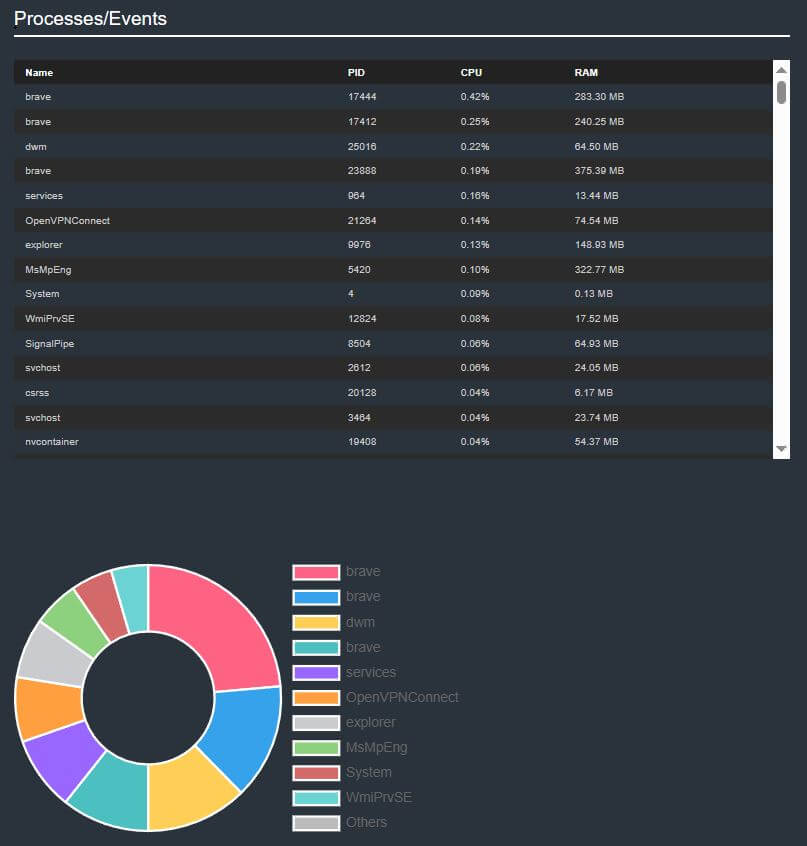
Process information helps technicians move from “the PC is using too many resources” to identifying which application or process may be responsible.
5. Check Available Disk Space
Disk space is easy to overlook.
A computer with very little free disk space can develop all kinds of secondary problems.
Windows needs available storage for temporary files, updates, application data, caching and the page file.
When you’re troubleshooting a slow computer, check:
Total drive size
Available disk space
Whether the system drive is nearly full
Whether low disk space corresponds with other reported problems
A nearly full system drive doesn’t automatically mean you’ve found the problem, but it should rarely be ignored.
RemoteToPC can also provide system monitoring and management information about managed computers, helping IT technicians identify resource problems without needing to physically visit the machine.
6. Don’t Ignore Windows Events
CPU, memory and process information show you what the machine is doing right now.
Windows events can help tell you what happened before you got there.
This is especially useful for intermittent problems.
The user might tell you:
“It froze twice this morning, but it’s working now.”
That’s one of the most frustrating kinds of IT problems because everything can look perfectly normal by the time the technician investigates.
Recent Windows events may provide clues involving:
Application crashes
Services stopping unexpectedly
Unexpected shutdowns
Windows errors
Hardware-related problems
Software failures
Update problems
This is why process and event information are so useful together.
A suspicious or failing process may point you toward the application involved, while the associated events may provide more information about what actually happened.
7. Check the Hardware Before Blaming Windows
Sometimes there isn’t actually anything wrong with Windows.
The computer may simply be underpowered for what the user is asking it to do.
System information becomes extremely useful here.
Check things such as:
CPU model
Installed memory
Operating system
Disk information
Computer name
System specifications
Uptime
Suppose a user complains that a PC struggles when several large applications are open simultaneously.
If you discover that it’s an older dual-core computer with 8 GB of RAM, you may be dealing with a capacity problem rather than a mysterious Windows problem.
Good IT troubleshooting isn’t only about fixing software.
This is an important change in how we think about remote support.
Traditional remote desktop software revolves around one question:
“How do I connect to that computer?”
For IT, the better first question is:
“What is happening on that computer?”
Once you’ve checked CPU, memory, disk space, processes, events and system information, you may already have a good idea of the problem.
Then, if necessary, start the remote session and fix it.
RemoteToPC combines unattended remote access with remote monitoring and management so technicians can move naturally from:
Monitor → Diagnose → Connect → Fix
rather than connecting blindly every time someone opens a ticket.
A Simple Remote PC Diagnostic Checklist
When someone reports that a remote Windows computer is slow, work through this sequence:
1. CPU
Is CPU utilization unusually high?
2. Memory
Is the computer running short of available RAM?
3. Processes
Which applications or processes are consuming those resources?
4. Disk
Is the system drive running low on free space?
5. Events
Did Windows record crashes, errors or other events that correspond with the problem?
6. Hardware
Does the computer actually have sufficient CPU, RAM and disk resources for its workload?
7. Remote Access
Once you’ve narrowed down the problem, connect to the machine if hands-on remediation is necessary.
This is a simple workflow, but it can dramatically reduce the amount of time technicians spend hunting blindly through remote computers.
From Reactive Remote Support to Remote IT Management
Remote access will always be an essential IT tool.
But connecting to a desktop is only one part of supporting computers.
IT professionals also need to know:
Is the computer online?
Is something consuming the processor?
Is it running short on memory?
What’s running?
What happened recently?
What hardware am I dealing with?
And finally:
Do I need to remote into it?
That’s the direction behind RemoteToPC’s expanded Manage Computers capabilities.
RemoteToPC was created with a simple philosophy:
Made by IT for IT.
That means giving technicians practical information they can actually use—not just another way to see somebody else’s desktop.
You can see more of RemoteToPC’s monitoring, management, system information, remote reboot, Wake-on-LAN and other IT features on our Remote Management & Monitoring for IT page.
You can also see the RemoteToPC interface on our Screenshots page.
RemoteToPC: See the Problem. Then Remote In.
Whether you’re responsible for a small internal IT department, supporting customers as an independent IT consultant, or managing hundreds of endpoints, better information can mean faster support.
RemoteToPC combines secure remote access with the monitoring and management capabilities IT professionals need to understand what’s happening on the computers they support.
Don’t just remote into the computer. Know what you’re walking into.
Start by checking CPU utilization, memory usage, available disk space, running processes, recent Windows events and the computer’s hardware information. These metrics can help narrow down the cause before starting a remote desktop session.
What causes a remote computer to become slow?
Common causes include high CPU utilization, insufficient available memory, resource-intensive processes, low disk space, failing applications, background services and hardware that is inadequate for the computer’s current workload.
Can I check CPU and RAM usage on a remote computer?
Yes. Remote monitoring and management tools can provide system resource information such as CPU, RAM and disk usage without requiring the technician to physically visit the computer.
Why should IT check running processes?
CPU or memory utilization tells you that resources are being consumed. The running process list can help identify which application or process is consuming them, making it much easier to find the underlying problem.
Why are Windows events useful for remote troubleshooting?
Some problems disappear before the technician can investigate them. Windows events can preserve information about application failures, system errors, service problems and other events that occurred earlier.
What is the difference between remote desktop and remote computer management?
Remote desktop software primarily lets you see and control another computer. Remote computer management adds information and management functions that can help IT professionals monitor, diagnose and manage machines before or without starting a full remote desktop session.
New capability lets IT administrators monitor running processes and terminate unresponsive applications without opening a remote desktop session. FORT WORTH, Texas — October 14, 2026
Remote access has become an essential tool for work and support in today’s flexible workplace. Many users need to remotely access another computer to retrieve